As drought conditions continue to challenge homeowners across the Wasatch Front, more Utah residents are rethinking how — and when — they water their landscapes. With growing pressure on local water supplies and higher utility costs, smart watering isn’t just a best practice — it’s becoming a necessity.
Fortunately, new technology and simple shifts in routine can help you maintain a thriving lawn and landscape while dramatically reducing water waste.
Here’s how smart watering works — and why it matters more than ever in Utah.
Timing is Everything
In Utah’s dry climate, when you water is just as important as how much you water. Experts agree that the early morning hours, between 4 a.m. and 8 a.m., are ideal for irrigation. Temperatures are lower, winds are calmer, and less water is lost to evaporation.
Watering in the heat of the day, by contrast, can waste up to 30% of your water before it even reaches your plant roots. Evening watering might seem logical, but lingering moisture can lead to fungus, especially in turf.
Know What to Water — and What Not To
A smart watering strategy isn’t about flooding your entire yard. It’s about targeted hydration. Prioritize:
- High-value plants like trees, shrubs, and perennials
- New plantings that haven’t established root systems yet
- Turf areas that get heavy sun or foot traffic
Meanwhile, consider skipping irrigation for:
- Established native plants
- Mulched or shaded zones
- Decorative hardscape areas
A tailored watering plan can cut usage without sacrificing aesthetics or plant health.
Use the Right Tools: Drip Systems and Smart Controllers
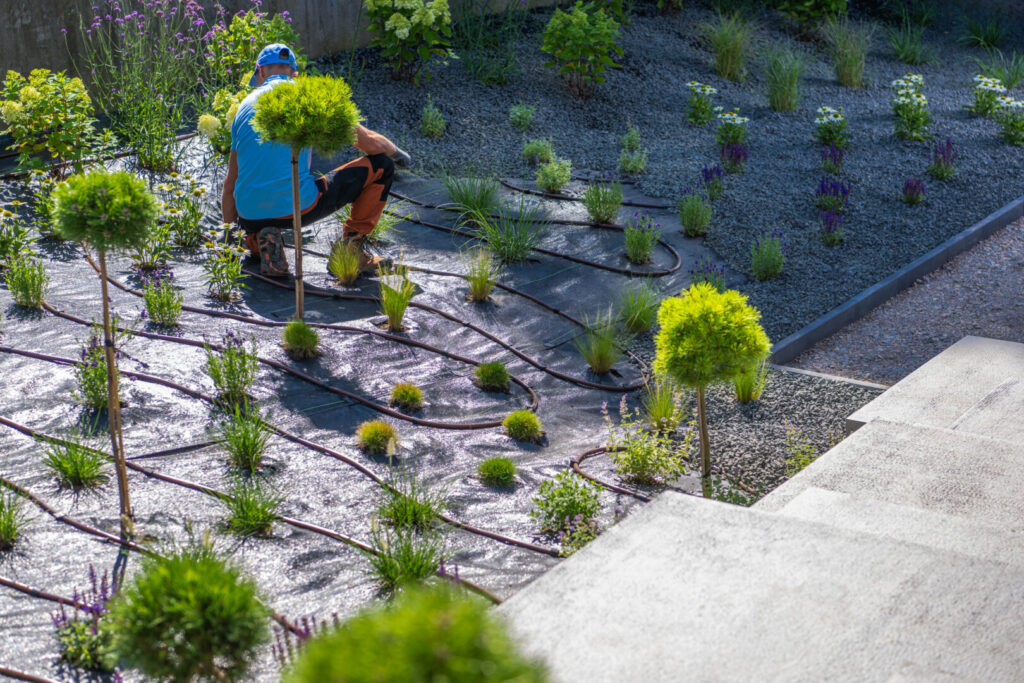
One of the most efficient upgrades a homeowner can make is switching from overhead sprinklers to drip irrigation in garden beds, shrub zones, and even tree wells. Drip systems deliver water directly to the roots, minimizing evaporation and overspray.
For lawns, smart irrigation controllers are a game changer. These devices use real-time weather data and soil moisture sensors to automatically adjust watering schedules based on actual conditions — not just a fixed timer.
Many cities in Utah even offer rebates to homeowners who install these systems.
Cycle and Soak: A Pro Technique for Lawns
Instead of running your sprinklers for 30 minutes straight, try a “cycle and soak” method:
- Water for 10 minutes
- Pause for 20–30 minutes
- Water again for 10 minutes
This technique allows water to penetrate deeper into the soil rather than running off the surface. Deeper watering encourages stronger roots, which are better equipped to handle heat and drought stress.
Don’t Forget Mulch and Soil Health
Smart watering starts beneath the surface. Healthy soil retains moisture more effectively, especially when paired with:
- Compost to improve soil structure
- Organic mulch to reduce surface evaporation
- Proper grading to avoid runoff
A 2–3 inch layer of mulch around trees and shrubs can reduce evaporation by up to 50%, while also helping prevent weeds that compete for water.
Watch the Weather (and Turn It Off)
It may sound obvious, but a surprisingly high number of sprinkler systems in Utah run during or after a rainstorm. Avoid this costly mistake by installing a rain sensor or simply turning off your system manually when precipitation is in the forecast.
If you’re using a smart controller, be sure it’s connected to a weather feed — many will skip watering automatically when it rains.
The Bottom Line
With Utah’s climate growing drier and water restrictions tightening, smart watering isn’t just an eco-conscious choice — it’s essential for long-term landscape health and cost savings. By upgrading your irrigation system, fine-tuning your schedule, and focusing on soil and plant health, you can keep your outdoor spaces vibrant while dramatically reducing your water use.
Need help implementing a smart watering system at home or across your commercial property? Worx Landscaping specializes in efficient irrigation design and drought-conscious planning across the Wasatch Front. Let us help you build a landscape that works smarter — not harder.